
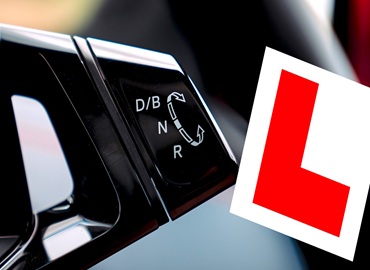
Automatic driving tests are becoming increasingly popular in the UK, with almost three in ten car driving tests now being taken in an automatic car. As electric vehicles (EVs) become more common and the UK moves towards the 2030 new petrol and diesel car sales deadline, more learner drivers are questioning whether they still need to learn to drive a manual car.
For generations, learning to drive in the UK has meant mastering the clutch, changing gear and getting to grips with hill starts. But that traditional rite of passage is changing.
So, is this the beginning of the end for the manual driving test?
The number of learner drivers taking an automatic driving test has increased dramatically over the past decade.
According to figures from the Driver and Vehicle Standards Agency (DVSA), 479,556 driving tests were taken in automatic cars in 2024/25, representing around 26% of all car driving tests.
Compare that with 2012/13, when just 87,844 automatic driving tests were taken. At that time, automatic tests represented only around 6% of all tests.
In other words, automatic driving tests have gone from approximately one in sixteen tests to more than one in four in just over a decade.
The growth has continued. In 2025/26, automatic tests accounted for approximately 29.4% of all car driving tests, according to figures reported by the AA.
That means almost three in every ten learners are now choosing to take their driving test in an automatic car.
The AA has previously predicted that automatic driving tests could account for around one in three tests by 2026/27.
That is a significant change in the way people are learning to drive.
There isn’t one single reason for the growth in automatic driving lessons and tests.
Instead, several changes are happening at the same time, including the increasing popularity of automatic cars, the growth of electric vehicles and changing attitudes towards driving.
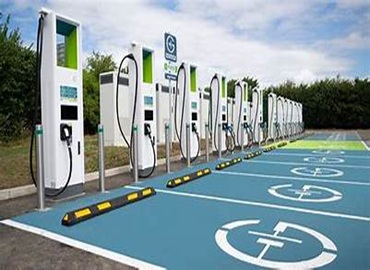
One of the biggest factors behind the shift towards automatic cars is the growth of electric vehicles.
Electric cars don’t use conventional manual gearboxes in the way petrol and diesel cars do. They are generally driven using an automatic transmission, meaning there is no clutch pedal or need for traditional manual gear changes.
This creates an interesting question for today’s learner driver:
Why spend time learning to drive a manual car if the car you eventually plan to own will be automatic?
The UK’s transition towards electric vehicles could therefore have a significant impact on the future of driving lessons and driving tests.
The government has confirmed its commitment to phasing out the sale of new purely petrol and diesel cars from 2030, while allowing some hybrid vehicles to continue beyond that date under current arrangements.
As we get closer to 2030, more learners may decide that an automatic driving licence is sufficient for their needs.
For many learner drivers, one of the biggest advantages of learning in an automatic car is simplicity.
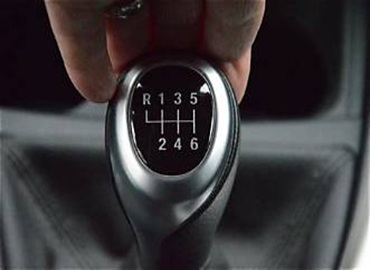
A manual learner has to coordinate:
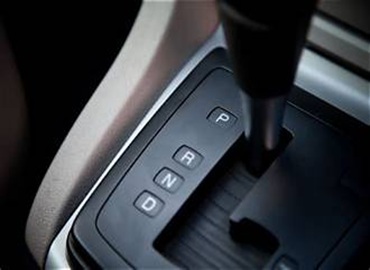
An automatic car removes the need to operate a clutch and manually select gears.
This can make driving feel less complicated, particularly in busy traffic, at junctions and during stop-start journeys.
For some learners, this means they can concentrate more of their attention on the road rather than worrying about clutch control or choosing the correct gear.
An automatic driving lesson can therefore feel less tiring and more straightforward for some learners.
However, an automatic car doesn’t make the driving test easy. Learners still need to demonstrate good observation, anticipation, judgement, positioning and overall control of the vehicle.
This is one of the most important things to understand before deciding between a manual and automatic driving test.
If you pass your driving test in a manual car, you can drive both manual and automatic cars.
However, if you pass your test in an automatic car, your licence will restrict you to automatic vehicles.
This is an important consideration when choosing between manual and automatic driving lessons.
If you know that you will only drive an automatic car or an electric vehicle, an automatic licence may be perfectly suitable.
However, if you want the greatest possible flexibility when buying or borrowing a car in the future, a manual driving licence still has a significant advantage.
This is becoming one of the biggest questions for learner drivers.
There isn’t necessarily a right answer. It depends on what you want from your driving licence and the type of car you expect to drive.
Choose a manual driving test if you:
Choose an automatic driving test if you:
For many learners, the decision ultimately comes down to one question:
What type of car are you likely to drive after passing your test?
Despite the rapid increase in automatic driving tests, it would be premature to say that the manual driving test is disappearing.
Automatic tests accounted for around 29.4% of car driving tests in 2025/26. That means manual tests still accounted for approximately 70% of tests.
However, the direction of travel is clear.
A decade ago, automatic tests represented only around 6% of tests. Today, they represent almost 30%.
The question may therefore no longer be whether automatic driving tests will become mainstream.
They already are.
The bigger question is when automatic tests could become the majority.
If current trends continue, the manual driving test could eventually become the less common option for new drivers.
The shift towards automatic driving tests isn’t limited to one particular group of learners.
DVSA figures highlighted by the AA show that the proportion of men taking automatic tests has increased significantly.
In 2012/13, men accounted for around 23% of learners taking automatic driving tests.
By 2024/25, that figure had increased to around 39%.
This suggests that the move towards automatic cars is becoming a broader change in driving attitudes rather than simply a preference among a particular group of learners.
It’s tempting to assume that an automatic driving test must be easier because the learner doesn’t have to change gear.
An automatic car does remove some of the physical and mental demands associated with driving a manual car.
There is no clutch to operate, no gear changes to make and no need to worry about selecting the correct gear.
However, the driving test still assesses the learner’s ability to drive safely.
You still need to demonstrate:
An automatic gearbox removes the clutch and gear-changing element of driving.
It doesn’t remove the need to become a safe and competent driver.
There are several potential advantages to learning to drive an automatic car.
Less Tiring
Automatic driving can be less tiring, particularly in heavy traffic.
Without a clutch and manual gear changes, there is less physical effort involved during stop-start driving.
Easier Car Control
For some learners, an automatic gearbox makes the car easier to control.
Removing clutch control and gear changes can allow learners to focus more heavily on observation and what is happening around them.
Less Wear and Tear
Learning to control a clutch takes practice.
Poor clutch control can contribute to unnecessary clutch wear. An automatic car removes the need for the driver to operate a conventional clutch manually.
Lower Running Costs with an EV
Electric vehicles can offer lower day-to-day running costs than many petrol and diesel cars.
EV owners can potentially save money on fuel and some maintenance costs, although the overall cost of ownership depends on the vehicle, electricity prices, mileage and other factors.
Although automatic driving has many advantages, there are also some disadvantages to consider.
You’re Restricted to Automatic Cars
This is the biggest disadvantage of an automatic-only licence.
A manual licence allows you to drive both manual and automatic cars.
An automatic licence restricts you to automatic vehicles unless you subsequently pass a manual driving test.
Electric Cars Can Be Expensive
Although EV running costs can be attractive, electric vehicles can still have a higher purchase price than some equivalent petrol or diesel cars.
The price gap is narrowing, however, and the growing used EV market is providing more affordable options.
Manual Used Cars Could Become Cheaper
There could be an interesting consequence of the increasing popularity of automatic driving tests.
If fewer new drivers want to learn in manual cars, demand for used manual vehicles could eventually fall.
That could increase the supply of affordable second-hand manual cars.
For learner drivers and younger motorists on a tight budget, this could make manual cars an increasingly attractive option.
Driving Range Can Still Be a Consideration
Internal combustion engine cars can still offer longer driving ranges between refuelling stops than some electric vehicles offer between charges.
EV technology is improving rapidly, but range and charging infrastructure remain considerations for drivers who regularly make long journeys.
The manual gearbox isn’t going to disappear overnight.
Millions of manual cars will remain on British roads for many years, and the used car market will continue to provide plenty of choice.
However, the new car market is changing, and that will inevitably influence learner drivers.
Automatic driving tests have risen from around 6% of all tests in 2012/13 to almost 30% today.
At the same time, the UK is moving towards a market dominated by electric, hybrid and automatic vehicles.
For today’s learner driver, the decision is therefore no longer simply about whether they prefer changing gears.
It’s about considering the type of vehicle they expect to drive for the next five, ten or even fifteen years.
There is currently no reason to assume that manual driving tests will suddenly be scrapped.
Manual cars remain a major part of the UK’s vehicle fleet, and a large proportion of learners still choose to take their test in a manual car.
However, the role of the manual driving test could change considerably over the coming years.
If automatic tests continue growing from almost 30% towards one in three and eventually beyond, the manual test could move from being the default choice to being the specialist option.
The manual driving test may not disappear.
But it could become less relevant to future generations of learner drivers.
Perhaps.
It would be too early to say that the manual driving test is coming to an end, but the evidence shows that its dominance is declining.
Automatic driving tests have increased dramatically in just over a decade.
Electric vehicles are becoming more common.
The UK is moving towards the 2030 phase-out of new purely petrol and diesel cars.
And learner drivers are increasingly asking whether they need to learn skills that they may never use once they pass their test.
For someone who wants maximum flexibility, a manual licence still makes sense because it allows them to drive both manual and automatic cars.
But for a learner who knows their future car will be an automatic, hybrid or EV, an automatic driving test could be the more logical choice.
The clutch and gear stick aren’t disappearing from Britain’s roads just yet.
But for the next generation of drivers, they may no longer be considered an essential part of learning to drive.
And that could represent one of the biggest changes to British driving lessons in a generation.
Is an automatic driving test easier than a manual test?
An automatic car removes clutch control and manual gear changes, which can make driving simpler for some learners. However, the driving test still assesses observation, anticipation, judgement, road positioning and safe driving.
Can I drive a manual car with an automatic licence?
No. Passing your driving test in an automatic restricts you to automatic vehicles. To drive a manual car, you would need to pass a manual driving test.
Can I drive an electric car with a manual driving licence?
Yes. A full manual car licence allows you to drive automatic vehicles, including electric cars, subject to the normal licence requirements.
Are automatic driving tests becoming more popular?
Yes. Automatic tests have increased from around 6% of all car driving tests in 2012/13 to around 29.4% in 2025/26.
Will automatic driving tests become more popular in the future?
The current trend suggests that automatic driving tests will continue to grow, particularly as electric vehicles become more common and the UK moves towards its 2030 new petrol and diesel car sales target.
Should I learn to drive manual or automatic?
If you want maximum flexibility, a manual licence allows you to drive both types of vehicle. If you know you will drive an automatic or electric vehicle and don’t expect to need a manual car, an automatic licence may be the better option.
Will manual cars disappear from the UK?
Not in the immediate future. Millions of manual cars remain on UK roads and will continue to be available in the second-hand market. However, the number of new manual cars available is expected to decline as the vehicle market moves towards automatic and electric vehicles.
Are you thinking about starting automatic driving lessons. If you are then please feel free to contact us to discuss your requirements and how we can help you on your journey to becoming a full licence holder.
If you’re preparing for your driving test or need advice on booking your driving test in Northamptonshire e.g. Burton Latimer, Kettering, Finedon or Wellingborough, we offer professional driving lessons designed to help learners pass first time, and advice and support with how and when to book your driving test.
Our aim is to give you the knowledge and skills necessary to be a safe and confident driver.
Contact us at Latimer Driver Training for more information about driving lessons or visit our frequently asked questions page.
The DVSA driving test booking rules 2026 have been recently been updated with the third scheduled changes.
Further restrictions to the driving test booking system in an effort to tackle test reselling and protect learner drivers from scams.
From 9 June 2026, learner drivers can only move their driving test booking to one of the three nearest driving test centres to the centre where their test is currently booked.
For existing bookings, the rule applies to the current test centre rather than the original location where the test was first booked.
For any changes made after 9 June 2026, the DVSA calculates the three nearest centres based on the test centre that is booked at the time the change is requested.
The DVSA says its priority is to:
The location restrictions are designed to discourage people from booking tests at centres where they never intend to take their test.
These new restrictions follow two earlier rule changes:
Since the 12 May 2026 changes, the DVSA has begun taking direct action against people and businesses that misuse the booking system.
The DVSA has cancelled tests that were identified as being booked or managed outside the new rules.
450 tests have already been cancelled where the same payment card was used to pay for multiple driving tests for different learner drivers, indicating that the tests were not booked by the learners themselves.

The DVSA has placed 4,034 online booking suspensions on driving licence holders.
A suspension means the learner can no longer book or manage tests online and must contact the DVSA customer service centre instead. The suspension remains in place for 12 months.
The DVSA has also reported unofficial driving test booking apps to Apple and Google.
17 apps that breached the DVSA’s terms and conditions have already been removed from the platforms.
The DVSA’s message to pupils is straightforward:
The consequences can be significant:
The DVSA’s 2026 driving test booking changes represent a major crackdown on test reselling, unofficial booking services, and social media scams. Learners should only use the official GOV.UK service to book and manage driving tests and should be aware that tests booked outside the rules risk cancellation. To learn more visit the published guide for learners.
If you’re preparing for your driving test or need advice on booking your driving test in Northamptonshire e.g. Burton Latimer, Kettering, Finedon or Wellingborough, we offer professional driving lessons designed to help learners pass first time, and advice and support with how and when to book your driving test.
Our aim is to give you the knowledge and skills necessary to be a safe and confident driver.
Contact Us here at Latimer Driver Training for more information about driving lessons or visit our frequently asked questions page.

From 12 May 2026, learner drivers must book their own driving test following major changes introduced by the Driver and Vehicle Standards Agency (DVSA).
This new rule is designed to stop third-party exploitation, prevent inflated resale prices, and ensure that driving test appointments go to genuine learners.
The DVSA has introduced strict new rules that fundamentally change how driving tests are booked in the UK.
Key changes:
These changes are part of a wider crackdown on bots and companies reselling driving test slots at higher prices.
The new system aims to make driving test booking fairer and more transparent.
Previously, third-party services used automated software (bots) to:
The DVSA has made it clear that its priority is to:
Under the new rules, learner drivers must complete the entire booking process themselves.
Booking overview:
You will need:
Booking online is currently the fastest method, as phone lines remain extremely busy.
Yes — but only manually.
After booking, you can log back into the system and check for earlier appointments. These are often referred to as “cancellation slots”, although there is no official cancellation list.
The DVSA still allows learners to swap test appointments — but under strict conditions.
You can only swap if:
Important rules:
From June 2026, additional location restrictions will apply, limiting swaps to nearby test centres.
This change has a significant impact on driving instructors and how they support learners.
Instructors can no longer:
This means:
In short — no.
The DVSA has already confirmed that these changes are not expected to reduce waiting times in the short term.
The goal is fairness, not faster access.
The biggest issue affecting driving test availability is not booking systems — it’s staffing.
Despite recruitment efforts:
However, according to the National Audit Office:
The core problem:
Until this is addressed, long waiting times are likely to continue.
The 2026 DVSA rule changes are a positive step toward a fairer system. By removing third-party interference, learner drivers now have full control over their driving test bookings.
However, the underlying issue of long waiting times remains unresolved. Without sustained investment in examiner recruitment and retention, learners may still face delays for the foreseeable future.
Information source DVSA / GOV.UK
If you’re preparing for your driving test in Northamptonshire e.g. Burton Latimer, Kettering, Finedon or Wellingborough, we offer professional driving lessons designed to help learners pass first time. Our aim is to give you the knowledge and skills necessary to be a safe and confident driver.
Contact Us here at Latimer Driver Training for more information about driving lessons or visit our frequently asked questions page.
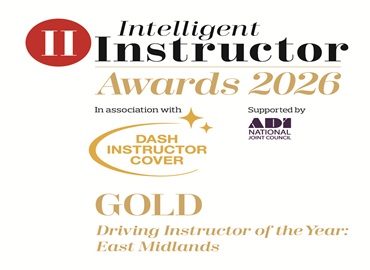
We are delighted to announce that our driving instructor John has won the Gold Award at the Intelligent Instructor Awards in the East Midlands region at this weekend’s ceremony in Milton Keynes. This prestigious achievement highlights John’s dedication to helping learners become safe, confident drivers and reinforces our reputation as a leading provider of driving lessons in the East Midlands.

The Intelligent Instructor Awards are the UK’s most recognised celebration of excellence in the driver training industry.
Now in their 7th year, these awards shine a spotlight on driving instructors and organisations that go above and beyond to make learning to drive:
Since 2019, the awards have recognised outstanding professionalism, innovation, and impact across the industry — from independent instructors to national driving schools.
Winners are selected through a rigorous two-stage process:
For the Driving Instructor of the Year category, learner drivers nominate their instructor. Judges then review real feedback from learners to determine the winners.
The judging panel includes leading figures in the driver training industry, such as:
This ensures every award is based on genuine expertise and industry credibility.
The Intelligent Instructor Awards are widely respected across the UK driving industry.
Winning a Gold Award demonstrates:
John’s success reflects the high-quality driving instruction we provide throughout the East Midlands.
If you’re looking for a driving instructor in the East Midlands who covers Kettering, Burton Latimer, and Wellingborough, you can be confident you’re learning from one of the best.
Whether you’re just starting out or looking to pass quickly and safely, our team are here to help.
Inspired by John’s success?
If you’re interested in becoming a driving instructor in the UK, we can help you start your journey.
Visit our website to:
- Learn more about instructor training
- Explore career opportunities
- Arrange a free, no-obligation chat
Contact Us here at Latimer Driver Training for more information about driving lessons and driving instructor training courses.
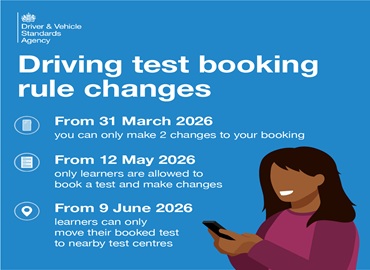
Last week the DVSA announced further measures to prevent the resale of driving tests in the UK.
If you’re planning to book your driving test soon, here’s everything you need to know about the DVSA Test Rule Changes 2026 and what you need to know as a learner driver.
The new rules for booking and managing car driving tests will be introduced from spring 2026. These changes are listed below with a timescale for the changes.
Rule | Current rules | New rules | From when |
Number of changes allowed | Up to 6 changes | Only 2 changes | From 31 March 2026 |
Who can book your test | You or your driving instructor | Only you | From 12 May 2026 |
Who can manage your test | You or your driving instructor | Only you | From 12 May 2026 |
Where you can move your test | Any test centre | Only to the 3 nearest test centres | From 9 June 2026 |
As stated above the new rules will be implemented over 3 phases starting from 31st March 2026. The second change will be implemented on 12th of May 2026, and the final change on the 9th June 2026
NO! From 12th May 2026, only the learner will be allowed to book, change, cancel or swap their own driving test.
The learner will have to confirm that:
From 12th May 2026, it will be against the law to book, change, cancel or swap a driving test for somebody else.
From 31st March 2026, you will only be able to make 2 changes to your existing booking. If you’ve already used all changes under the current rules, you will be able to make 2 more changes from 31st March 2026.
Only use your limited changes when your circumstances genuinely change.
If you book a new test from 9th June 2026, you will only be able to move your test to:
Example
You book your test at Chesterfield. The 3 nearest centres to Chesterfield are:
Then you can use your first change to move your test to one of those.
You decide to move your test to Sheffield (Handsworth). This means you are allowed to make one more change.
You can use your second change to move your test to the 3 centres nearest to Sheffield (Handsworth). These are:
Also you can use your second change to move back to the test centre your first booked at, which was Chesterfield.
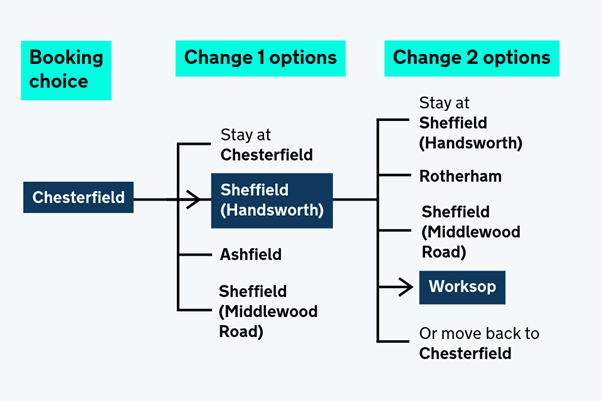
A chart showing an example of your options for changing your test.
If you have an existing booking, the new rule applies to where your test is currently booked at on 9th June 2026 – not where you first booked.
Example
In February 2026, you booked your test at St Helens with a test date of July 2026. In May 2026, you decide to use your first change to move it to Watford with a test date of July 2026.
On 9th June 2026, the new rules come in. Your test is now at Watford, so you can use your second change to move to the 3 nearest centres to Watford. These are:
You can only move your test to these centres. You cannot move your test back to St Helens.
From 9th June 2026 for local learners, the new guidance shows that:
Northampton can be moved to Wellingborough, Kettering or Rugby
Kettering can be moved to Wellingborough, Northampton or Bedford
Wellingborough can be moved to Kettering, Northampton or Bedford
If you need to make more changes after you have used your 2 changes, you will have to cancel your test and book a new one.
You will get a full refund if you cancel at least 10 full working days before the test date.
From 12th May 2026, if you’re a driving instructor, you will no longer be able to use the service to book and manage car driving tests for your pupils.
From 12th May 2026, it will be against the law for you or anyone else to:
Any driving tests you have already booked for your pupils are still valid and will go ahead as planned.
You will need to make sure your pupils have their driving test reference numbers for these tests. This is so they can manage their tests themselves.
If you are a driving instructor, you will still be able to manage when you are available to take your pupils for driving tests.
You can set:
This means that if a learner driver adds your driving instructor personal reference number to your booking, the booking system will automatically check if you are available.
Only these things count as a change:
If you change more than one thing at the same time (for example, the date and test centre together), this still counts as one change.
Example
If you change your test from Northampton on 4 June to Kettering on 12 May, this counts as one change
From 12 May 2026, only the learner will be allowed to change, cancel or swap their own driving test.
You will have to confirm that you:
These things will not count towards your change limit:
When you book your test, you should:
YES. From 12 May 2026, it will be against the law to change, cancel or swap a driving test for someone else.
The new DVSA rules mean planning your driving test is more important than ever.
At Latimer Driver Training, we recommend speaking to your instructor and only booking when you’re truly ready.
If you’re looking for expert guidance, professional driving lessons, or instructor training, visit our website www.l-dt.co.uk/ to get started, or contact us at www.l-dt.co.uk/contact-us/
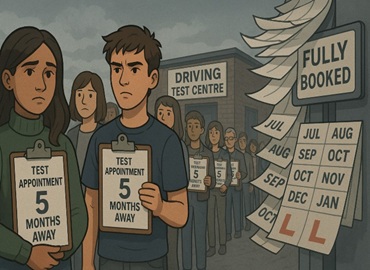
Driving test waiting times continue to be one of the biggest frustrations facing learner drivers and driving instructors across the UK. Since the COVID-19 restrictions were lifted, demand for driving tests has consistently outstripped availability, leaving many learners waiting months to secure a test date.
At the time of writing, many test centres are showing waiting times of up to 24 weeks. With driving test cancellations becoming increasingly difficult to find, both learners and instructors are finding the current system challenging and, at times, incredibly frustrating.
The current backlog can largely be traced back to the disruption caused by the COVID-19 pandemic. During lockdowns, driving tests were suspended for extended periods, creating a significant backlog of learners waiting to take their tests.
Although the Driver and Vehicle Standards Agency (DVSA) has worked to increase testing capacity, demand has remained exceptionally high. As a result, many areas of the country continue to experience long waiting times and limited driving test availability.
Since 2022, the DVSA has been actively recruiting new driving examiners in an effort to reduce the backlog. Initially, the agency aimed to recruit around 170 additional examiners to increase testing capacity.
One of the first major measures was introduced in October 2023, when qualified examiners who were working in non-testing roles were temporarily redeployed to conduct driving tests. This had a positive impact, reducing average waiting times by approximately six weeks.
However, once these staff members returned to their original positions, waiting times began to increase again, highlighting the ongoing challenge of maintaining sufficient testing capacity.
In April 2025, the DVSA introduced new rules designed to reduce wasted test appointments and make better use of available driving test slots.
The changes included:
At the time, the DVSA stated that:
“Fewer driving test slots will be wasted as the government announces an extension to the window for test cancellations to prevent last-minute changes.”
However, the results have not necessarily matched expectations. In the months following the changes, the number of learners failing to attend their booked driving tests reportedly increased by around 1% each month through to September 2025.
While it is still difficult to assess the full impact of these measures, they have not yet delivered a significant reduction in waiting times.
In December 2025, the Secretary of State for Transport, Heidi Alexander, announced a further package of measures aimed at tackling the ongoing driving test backlog.
Importantly, she confirmed that the standard driving test fee would remain at £62, stating that learners should not be penalised for the current situation.
The new measures, expected to be introduced during 2026, include:
The following actions will each count as one change:
Alongside these changes, the government also announced that 36 Ministry of Defence examiners would be made available to conduct driving tests, creating approximately 6,500 additional test slots.
The DVSA has been continuously recruiting examiners since 2022. However, while many new examiners have joined the service, a significant number of experienced examiners have also left for a variety of reasons.
As a result, despite nearly four years of recruitment efforts, the overall increase in examiner numbers is believed to be fewer than 50 additional examiners.
The government’s latest measures are clearly aimed at reducing the backlog and preventing learners from being exploited by organisations and individuals who sell driving test appointments at inflated prices.
Whether these changes will achieve their intended outcome remains to be seen.
As driving instructors, there is very little we can do to influence waiting times or test availability. What we can do is ensure that our learners are fully prepared when their test date finally arrives.
Personally, I am not convinced that these latest measures will have a significant impact on driving test waiting times. Nor do I believe they will completely deter those who are willing to exploit the system for financial gain. History has shown that whenever there is money to be made, people often find ways around restrictions.
That said, the success or failure of these measures will ultimately be determined by the results. The real question is where we will be in 12 months’ time. If waiting times have reduced to a more reasonable level and learners can access driving tests more easily, then the measures will have achieved their purpose.
Until then, learners and instructors alike will be watching closely and hoping that meaningful improvements are finally on the horizon.
Many driving test centres currently have waiting times of up to 24 weeks, although this varies depending on location and demand.
The backlog is primarily a result of COVID-19 disruptions, high demand for tests, and ongoing examiner shortages.
Earlier appointments can sometimes become available through official DVSA cancellations, although these are often highly sought after. Search for earlier driving test dates here
The intention is to improve driving test availability and reduce misuse of the booking system, but it is too early to know whether the measures will significantly reduce waiting times.
If you’re preparing for your driving test in Northamptonshire e.g. Burton Latimer, Kettering, Finedon or Wellingborough, we offer professional driving lessons designed to help learners pass first time. Our aim is to give you the knowledge and skills necessary to be a safe and confident driver.
Contact Us here at Latimer Driver Training for more information about driving lessons.